

Earthy’s Story: Finding Safety, Healing, and a Future
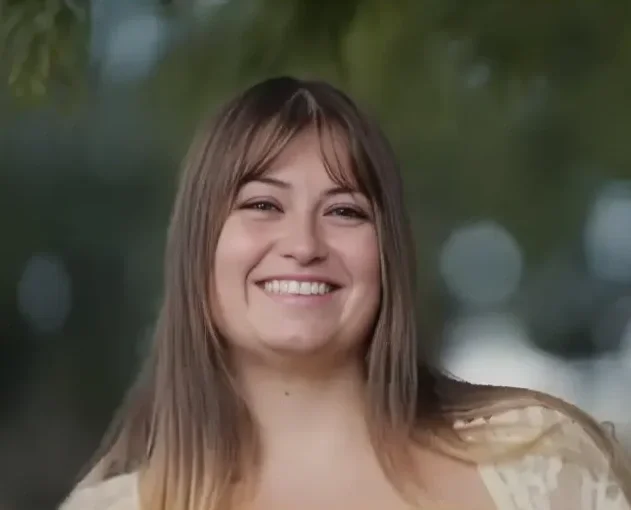
For much of her childhood, home was never one place.
She moved between her father’s home, her stepmother’s home, and her grandmother’s house. Her parents struggled with addiction long before she was born, and while her basic needs were often met, love and stability were not. From an early age, she learned to survive without consistent care or protection.
As she got older, her mental health struggles intensified. She spent time in and out of mental health hospitals, searching for stability that always seemed just out of reach. A few years ago, she became homeless for the first time — a moment that would place her in extreme danger.
While experiencing homelessness, she was trafficked.
The manipulation happened gradually. What began as someone offering attention and direction quickly became control. The tactics were subtle and relentless, creating a sense of dependency that felt normal to her at the time. She didn’t recognize the abuse for what it was — she believed this was simply how life worked.
Her trafficker used isolation, exhaustion, and emotional games to maintain control, often forcing her to walk long distances late at night, leaving her alone for hours, and constantly shifting expectations. The fear and confusion were constant, even when she didn’t yet have language for them.
During one of those nights, she encountered someone who would unknowingly witness just how vulnerable she was. It was only later, after her trafficker was arrested, that she began to understand how unsafe her situation had been — and how close she had come to losing everything.
Throughout her life, she had heard the same message repeated in different ways: that she wouldn’t amount to much, that her future would be limited, that her circumstances defined her worth. After being homeless for so long and trying repeatedly to move forward only to be knocked back, she began to believe it.
Survival mode became a mindset.
She assumed homelessness was all she would ever know.
Then she heard about City House — not from an institution, but from another young person experiencing homelessness. When she came in for an interview, something happened that had never happened before: someone saw potential in her.
City House staff didn’t see her past as a liability. They saw her drive. Her work ethic. Her determination to want more, even after everything she had endured. For the first time, someone told her that with the right support and encouragement, she could do great things.
That belief mattered more than she realized.
At City House, she found more than resources — she found consistency, safety, and genuine care. Slowly, her confidence began to rebuild. She started to recognize her own resilience and the strength it took to survive what she had been through.
With support from City House, she began planning for her future. She is preparing to start college, accessing educational funding and opportunities she wouldn’t have known existed on her own. For the first time, her goals feel attainable — not because her past disappeared, but because she no longer has to face the future alone.
She knows that what she experienced was not normal — even if it once felt that way. And she knows that without a program like City House, her story could have ended very differently.
Today, when she walks into City House, she feels something she rarely felt growing up: cared for. Seen. Valued. The support is consistent, the relationships are real, and the message is clear — she belongs here.
Her journey is a powerful reminder of why programs like City House exist. When young people are met with safety, belief, and opportunity, healing becomes possible. Futures reopen. And hope takes root.